
How Solar Works
Power your life with clean, renewable energy from the sun.
A solar energy system captures the sun's energy and converts it into electricity that can power a home, car, or business.
The sun constantly releases tiny packets of energy called photons. So many photons reach earth every hour that – if there were some way to harness them all – they could meet the world’s energy needs.

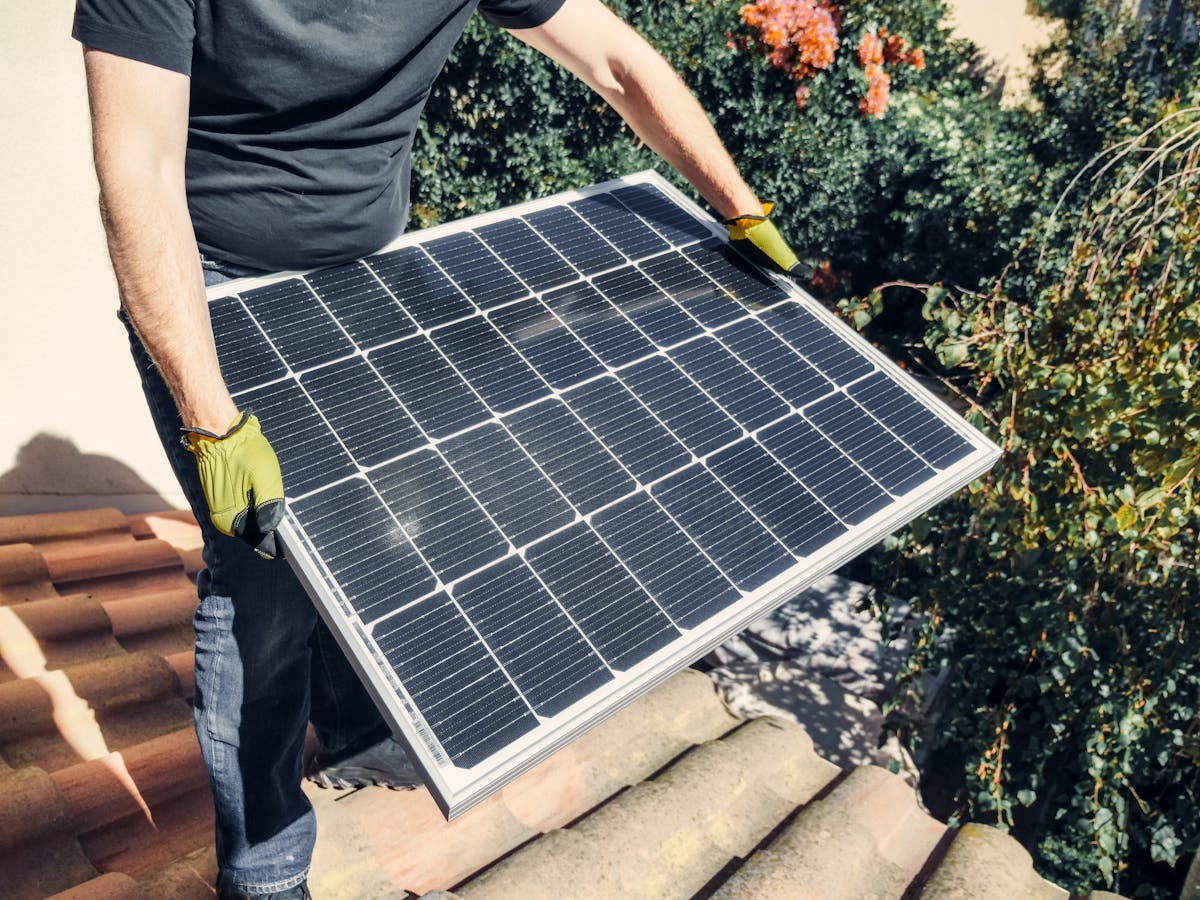
A home or business solar array grabs just a few of those photons using photovoltaic (PV) solar panels.
An array can be installed on a roof, in a yard, or anywhere there's unobstructed sunlight. More panels mean more energy can be generated.
Every array is made up of several solar panels, and every solar panel is made up of several solar cells. Those cells do the daily work of converting the sun's photons into electricity.
Solar cells are made of silicon. Every time photons hit the silicon, they transfer energy to loosen silicon electrons. Those loosened, or "free" electrons, are then channeled into an electric current.
PV solar panels generate direct current (DC) electricity.
DC is great for powering small devices—like flashlights and other battery-powered devices—but it's expensive to transmit over long distances. That's why homes and power grids use alternating current or AC.

For solar powered buildings that can use net metering, the inverter also allows the energy to be fed into the electrical grid.
That can save a homeowner thousands of dollars over the life of their PV solar system.
We’re here to walk you through every step—from how solar works to designing a system that meets your energy needs, budget, and goals.
